Why Your Carrots Failed (It Wasn't the Seeds)
Forked, stubby, or no-show carrots almost always come down to three fixable things — soil, moisture, and patience. Here's how to get long, straight roots next time.
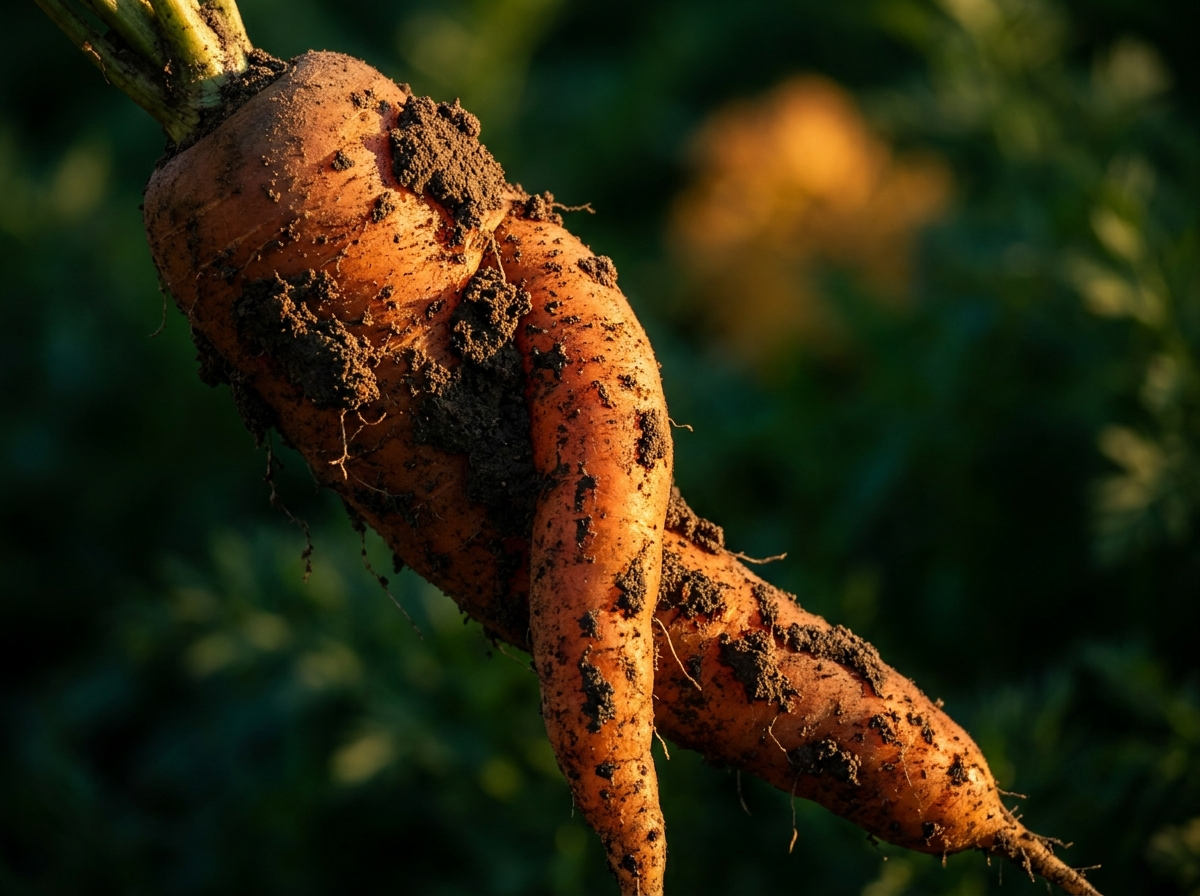
If you've ever pulled up a carrot that looked more like a gnarled little hand than the supermarket-straight root you were promised, you're not alone. Carrots are one of the most-searched "why did my crop fail" vegetables — and the reasons are almost always the same three things.
1. Your soil was too heavy
Carrots are roots. They need to push straight down through loose, stone-free soil. If your bed is compacted clay or full of rocks, the root hits resistance and forks, twists, or splits.
The fix: Loosen the top 12 inches until it's crumbly. Pull out stones. If your ground is heavy clay, grow in a raised bed or a deep container filled with a sandy, loose mix. Don't add fresh manure — too much nitrogen makes carrots grow hairy, forked, and leafy at the expense of the root.
2. You let them dry out (or drowned them)
Carrots are slow to germinate — often 14–21 days — and the topsoil has to stay consistently moist that entire time. Most failed carrot patches are simply seeds that dried out three days after sowing.
The fix: Keep the surface damp until seedlings appear. A light board or piece of cardboard laid over the row holds moisture — just check daily and remove it the moment you see green.
3. You didn't thin them
This is the hard one. When seedlings come up in a thick clump, they choke each other out, and you get a tangle of stubby, twisted roots fighting for the same space.
The fix: Once seedlings are a couple of inches tall, thin them so each one has about 2–3 cm of room. It feels brutal to pull healthy seedlings, but the ones that remain will actually size up.
The pattern behind all three
Notice something? None of these are about buying better seeds or having a "green thumb." They're about timing and information — knowing the one thing that matters at each stage. That's the whole reason we're building Off Grid Diet: to put the right next step in front of you before the garden fails, not after.
Want the weekly breakdown of what to plant, fix, and harvest? Subscribe below — one practical article every week, plus the research notes behind each finding.